February is perhaps my least favorite month. Other than the Super Bowl, there’s not much else to recommend it. When you live in the South, you are on the tail end of winter yet it still isn’t Spring. Here it’s not unusual to have pollen clouds one day and a light freeze the next. I desperately want to dig in the dirt and plant something but it’s just too early.
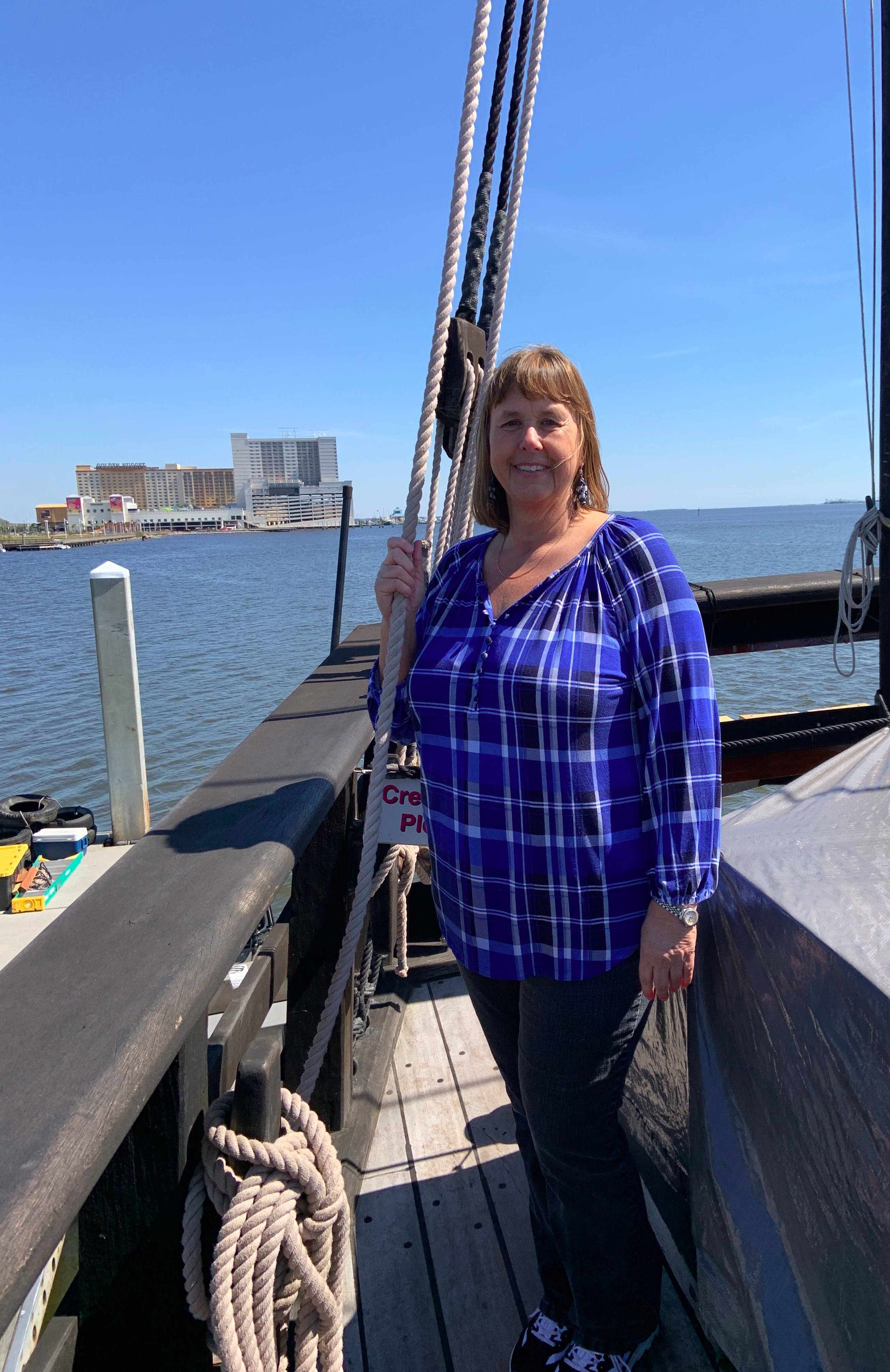
But every once in a while you get that beautiful “almost” Spring day and suddenly February doesn’t seem so bad. Yesterday was one of those days, thank goodness, and a bonus day to boot since it was Feb. 29. The sun was shining, a breeze was blowing, and you could be outside for a while without a jacket. A friend of mine and I took advantage of the beautiful day and took a tour of the Nina and Pinta, replicas of two of the ships Columbus used on his expeditions to the New World. They were docked in Biloxi and open for tours. New thing for February was done in the nick of time!
The line was long, but it moved fairly quickly. Still, we were in line for an hour, so we were very happy the weather turned out so nice. As we got closer it was apparent that the ships were much smaller than expected. Pleasure boats parked near them were not much smaller, and to think of Columbus and his crew setting out for the unknown in those tiny ships is rather mind-boggling.
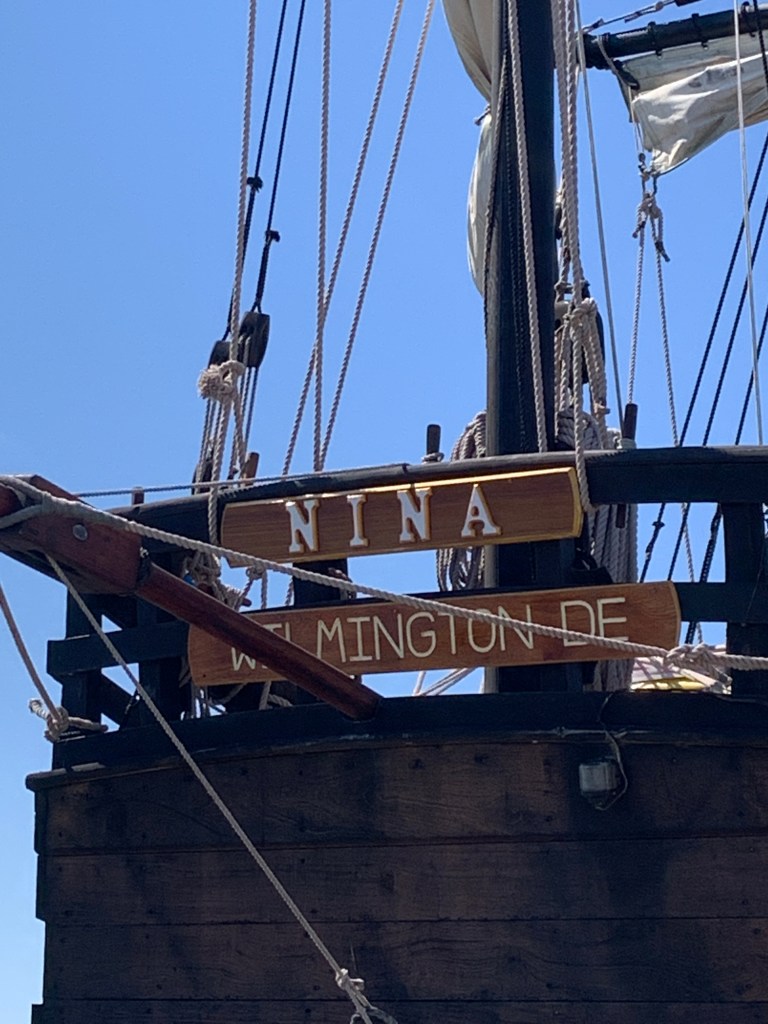
We boarded the first ship, the Nina, and a got a nice overview from one of the volunteers who works on the ship. As it turns out, the boats are manned by volunteers, all of whom take 3 or 4 week excursions on the ships giving tours and doing basic maintenance as they sail from port to port. Retirement goals! Anyway, we had a second tour with another docent then exited the Nina fairly quickly: had to get through the line. Luckily you’re on your own when you board the Pinta and can stay longer, look through things, and ask more questions.
I can’t say that I learned a lot more than I already knew, but did learn two new things. First, the crews for the Nina and Pinta were 24 and 26 men respectively, much smaller than I had assumed. When you see the ships, though, it’s easy to understand that it would be a little crowded even with such small numbers. The Santa Maria was a larger ship and had a proportionally larger crew but there is no replica of that available for touring.
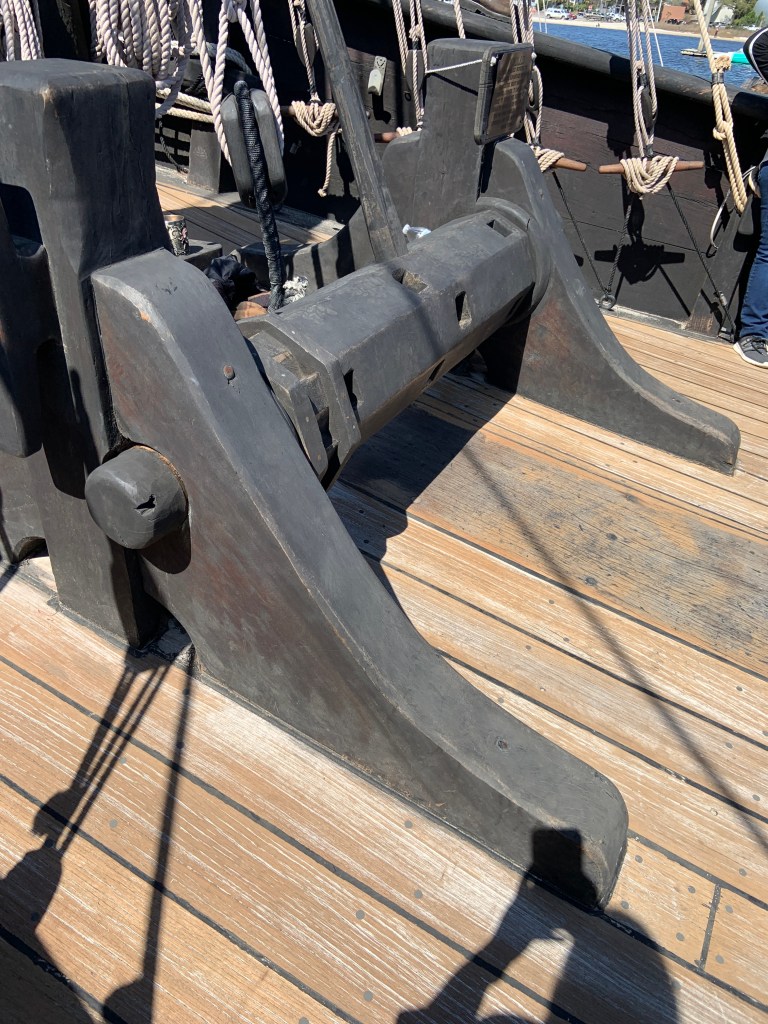
The second thing I found interesting was that these ships always carried several spare anchors, sort of like spare tires. Given the weight of the anchors — several hundred pounds — and the amount of time it took to raise them, any need for a quick departure such as, oh, say a pirate attack, would necessitate that they cut the rope to the anchor and get moving as quickly as possible. Hence, according to the tour guides, the term “cut and run.” Not sure of that etymology but I like the story!
More adventures to come in March!
 That Sassy Age